

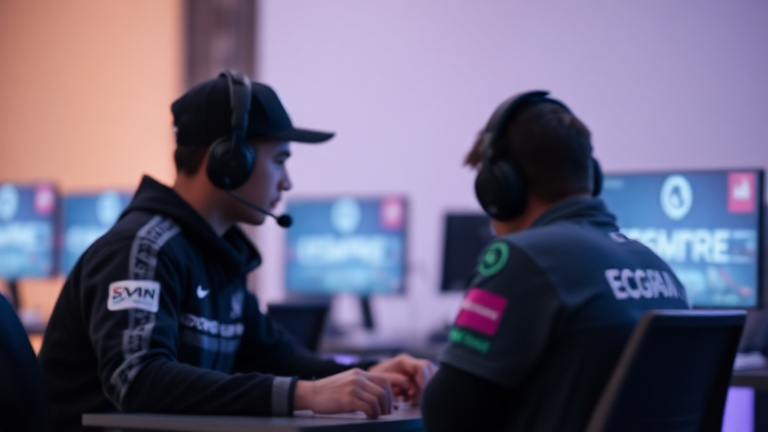
The esports landscape has experienced a significant shift, with esports scholarships emerging as a game-changer for aspiring professional players. Universities across the country now recognize gaming talent as deserving financial support, allowing students to manage rigorous academic pursuits with high-level professional play. This article examines how esports scholarships are transforming higher education, opening unprecedented pathways for gamers to build sustainable careers while completing degrees, and examining the opportunities and challenges this growing industry presents for student-athletes.
The Rise of Esports Scholarships in College
The esports industry has experienced significant growth over the past decade, transforming gaming from a casual hobby into a legitimate competitive pursuit. Universities have recognized this phenomenon, acknowledging that talented esports players deserve the same academic and financial support as traditional athletes. Major institutions now provide funding tailored to gamers, creating pathways that were not available before. This shift demonstrates a broader cultural acceptance of esports as a legitimate professional domain, establishing esports within academic environments and establishing it as a rigorous field worthy of academic support and acknowledgment.
Esports scholarships represent a significant evolution in university financial approaches. Colleges and universities across North America, Europe, and Asia have developed focused esports departments with substantial financial commitments. These scholarships pay for tuition, room and board, and living expenses, permitting talented players to compete at the highest levels without monetary constraints. The trend has accelerated rapidly, with hundreds of institutions now awarding esports scholarships each year. This expansion shows the industry’s sustainability and the authentic interest for organized routes that enable students to follow esports paths while sustaining educational advancement and acquiring worthwhile credentials concurrently.
The growth of esports scholarships has expanded opportunities within the esports sector. Previously, aspiring professional players encountered a tough decision between pursuing education or dedicating themselves entirely to competitive gaming. Scholarships eliminate this false dichotomy, allowing students to improve their competitive abilities while earning academic qualifications and industry connections. Universities gain from stronger recruitment efforts, increased student engagement, and deeper ties to their communities. This mutually beneficial partnership between higher education and esports creates sustainable ecosystems where institutions support emerging talent, players gain legitimate pathways to professional careers, and the broader esports landscape benefits from a more knowledgeable, versatile competitive player base.
Economic Advantages and Professional Growth Prospects
Esports scholarships provide substantial financial relief for competitive players, covering tuition, housing, and living expenses that would otherwise burden families or demand substantial student loans. These scholarships validate gaming talent as valuable as traditional athletics, allowing talented players to pursue higher education without paralyzing financial burden. Universities providing robust esports packages attract top-tier players globally, establishing competitive squads while supporting students to concentrate on both academics and professional gaming development in parallel.
Beyond immediate financial support, esports scholarships unlock diverse career pathways reaching well past competitive play. Graduates utilize their esports background into roles as team managers, coaches, content creators, game developers, and esports analysts. The scholarship experience delivers professional connections, industry links, and professional credentials that substantially improve post-graduation employment prospects. Many scholarship recipients transition into lucrative esports careers, positioning themselves as influential figures within gaming communities while maintaining the educational foundation their degrees provide for long-term career stability.
Balancing Educational Achievement with Professional Esports
Esports scholarship awardees face the particular obstacle of sustaining academic achievement while performing at elite tiers. Universities offering these scholarships establish strict academic requirements, confirming students prioritize their studies in conjunction with gaming obligations. Many institutions establish mandatory study halls, performance assessment, and academic advisors focused on esports athletes. This dual-focus approach creates a structured environment where students cultivate discipline, organizational competencies, and resilience. The integration of academic demands and professional competition pushes students to excel in both domains, readying them for prosperous career trajectories outside professional gaming.
High-performing esports scholars demonstrate exceptional organizational abilities, balancing training schedules, tournament travel, and course requirements. Coaching staff and academic counselors partner together to ensure students meet academic milestones without compromising athletic performance. Numerous institutions offer flexible scheduling, distance learning options, and personalized academic support designed for athletes’ needs. This integrated support structure acknowledges that student-athletes require more than just monetary support; they require university commitment to their complete development. Schools prioritizing comprehensive athlete development create environments where academic achievement and esports performance complement each other.
Key Strategies for Achieving Equilibrium
- Establish consistent daily routines combining study and practice time effectively.
- Utilize campus resources such as tutoring, writing centers, and academic support programs.
- Communicate regularly with professors about tournament schedules and assignment deadlines.
- Participate in study groups with other esports competitors dealing with similar academic challenges.
- Prioritize adequate rest, proper nutrition, and emotional well-being to support peak cognitive performance.
The intersection of academics and competitive gaming eventually improves student-athletes’ job prospects. Employers increasingly value candidates with qualifications alongside proven esports accomplishments, understanding the focus and dedication required. Graduates with competitive gaming scholarships gain access to distinct competitive benefits in technology, business, and entertainment industries. Whether chasing professional gaming careers or other career paths, these students leave with credentials, experience, and networks that enable lasting professional achievement and professional growth.
